Dr. Steven Price teaches plant identification for the Nolichucky Outdoor Learning Institute. Text and analysis greatly assisted by Muse, an AI system, and Ann, the author’s wife. The underlying material, the field observations, and the teaching are the author's.
Why Leaves Change Color
Dr. Steve Price, PhD • November 10, 2026
What a tree is really doing when the hills turn red and gold
I'm sitting here at home in Jonesborough, Tennessee watching the leaves fall as we approach the end of leaf season, and wondering if it is too late to publish an article about leaf color. But I think why leaves change color is an enduring question — one we take with us throughout the year — so here goes.
And first, a correction to what the falling leaves suggest. Fall color looks like a leaf dying, but it is closer to the opposite. When a hillside turns, what you are watching is a salvage operation — a tree taking a leaf apart, recovering everything in it worth keeping, and only then letting it go. The colors are what that work reveals, as well as what it newly makes.
I teach plant identification classes for the Nolichucky Outdoor Learning Institute, and every fall, on the trails at Rocky Fork State Park, this is the question that comes up first. Here is the answer I give.
The calendar is set by day length
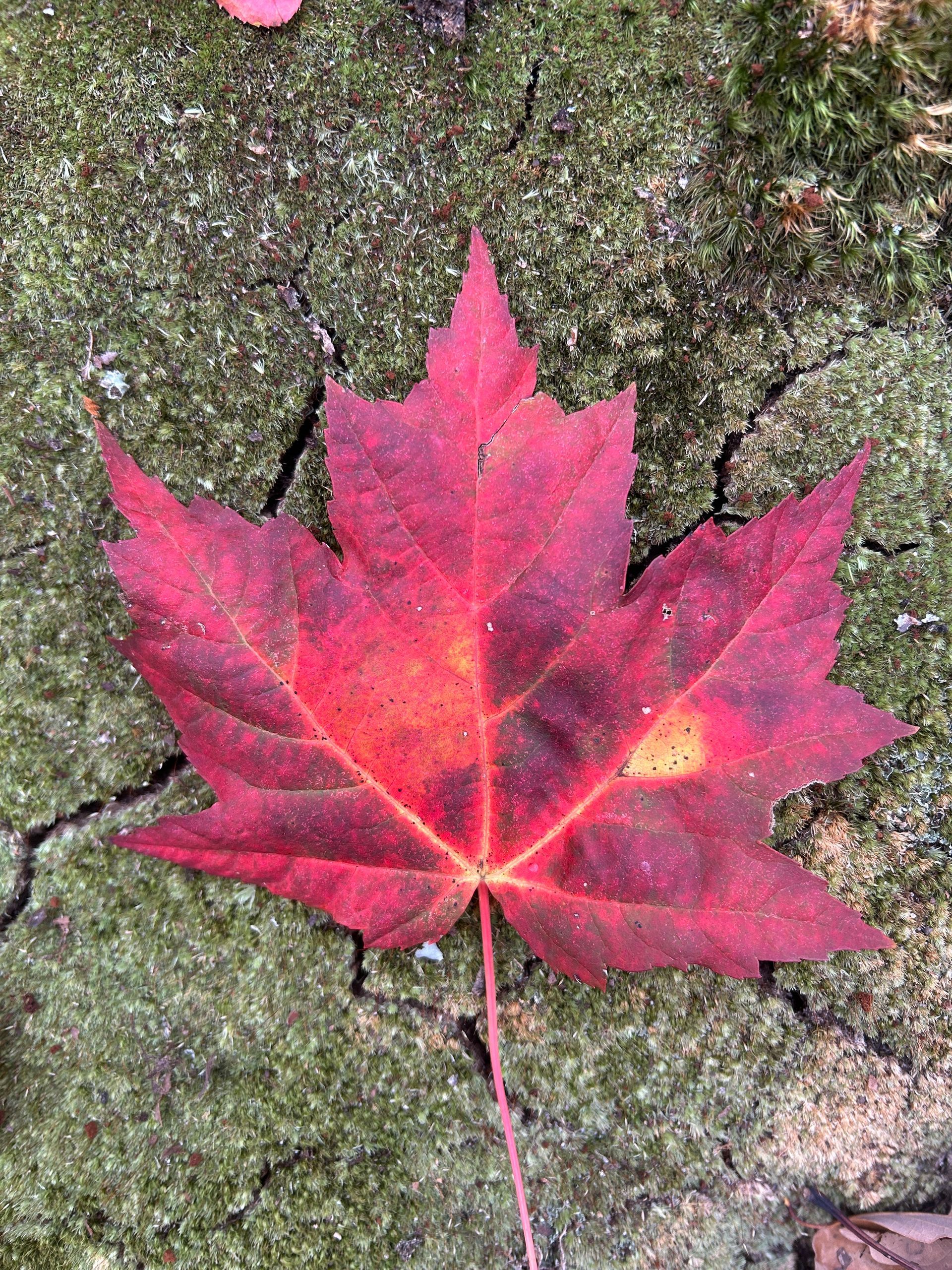
A green leaf is green because of chlorophyll, the pigment that runs photosynthesis. Chlorophyll is expensive to maintain, and a deciduous tree does not throw it away carelessly. As the days shorten in fall — day length, not temperature, is the master signal — the tree begins dismantling the leaf. It forms a corky layer at the base of the leaf stalk, breaks the chlorophyll down, and ships the valuable parts, above all nitrogen and phosphorus, back into the twigs and roots for storage during winter. Fall color is what is left when the green drains out during that process — plus one set of colors the tree makes on purpose, at the end.
The yellows were there all along
The yellows and oranges in a beautiful fall leaf are not new. Carotenoids — the same pigment family that colors carrots — sit in the leaf all season as accessory pigments, masked by the much stronger green of chlorophyll. When the chlorophyll goes, the carotenoids show through as the clear, bright yellow of the tulip poplar, the rich golden yellow of the hickories, the golds of beech and birch, and the orange of a sugar maple where carotenoids run strong. Nothing is created here. A covering is removed.
The reds are made fresh and new every fall — and we think we know why
The reds and purples are different. Anthocyanins — the pigments of red cabbage, blueberries, and red wine — are built in the leaf in autumn, from sugars, just as the leaf is being dismantled. Why would a tree spend energy making pigment for a leaf it is about to drop?
The leading answer is the photoprotection hypothesis--and I want to make it clear from the outset that this is a hypothesis — a good one, with experimental support, but not settled science. The idea is this: while the tree is stripping the leaf's machinery and resorbing its nutrients, that machinery is still absorbing sunlight it can no longer use, and excess light at this stage damages the very tissue doing the salvaging. The newly created anthocyanins act as a sunscreen, shading the leaf that is being dismantled and buying time for that work to be finished. That would explain why reds are brightest on the sun-exposed outer leaves of a tree, and why sunny days followed by cool — not freezing — nights, give the most brilliant reds.
So what does sugar have to do with it? Two things. First, an anthocyanin is part sugar to begin with — the pigment molecule is built with a sugar attached, so no sugar, no red. Second, fall is when the sugar gets stuck. All summer the leaf ships its sugar out to the tree for use esewhere or storage. In autumn the tree seals the leaf stem off, layer by layer, getting ready to let the leaf go — and a sealed stem traps sugar the way a closed road traps cars. On a bright day the leaf is still making sugar at full tilt, but now it has nowhere to go, so it piles up in the leaf. Cool nights help the pile grow: the cold slows everything down just enough that the sugar is not burned or moved before morning. The leaf takes that surplus and builds red pigment out of it. That is the whole recipe for a brilliant fall in one line — sunny days to make the sugar, cool nights to keep it in the leaf, and a closing stem to trap it there.
The browns are what is left behind
The browns are mostly tannins — bitter, astringent compounds that serve the leaf as a defense against insects and disease while it lives. And they are simply left behind when everything worth salvaging is gone. Brown is the color of a finished leaf. It dominates in the oaks, the great tannin-makers, and the oaks get their own word below.
Our local sequence
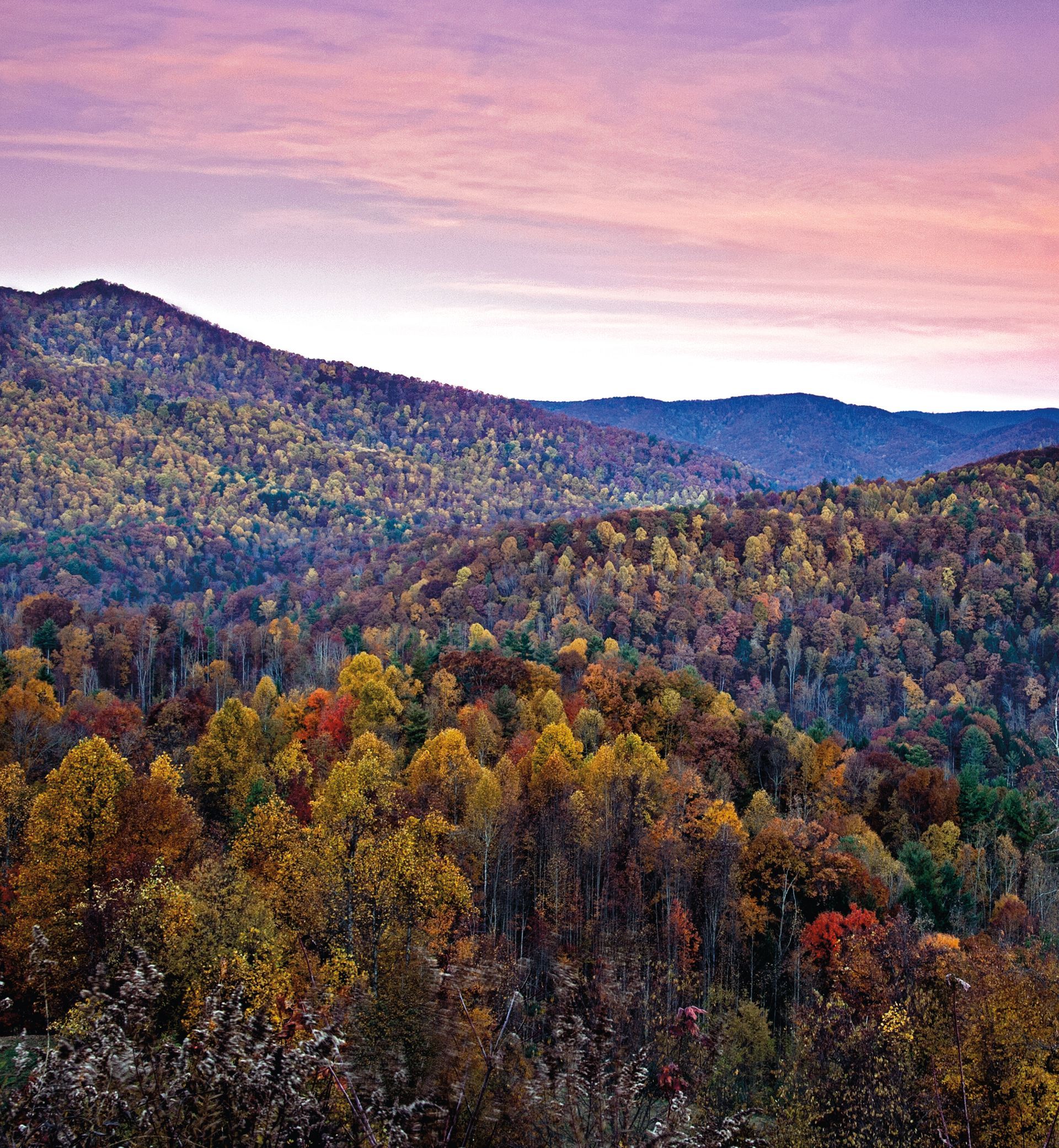
Because the leaf-turning calendar is set by day length, the order in which various species start losing leaves is much the same every year, even though weather writes variation on top of it. Sourwood and black gum turn first — black gum a brilliant scarlet, often starting in patches in late summer, and sourwood a crimson deepening to a burgundy that is among the finest reds we have. The maples and hickories carry the middle of the season: red maple runs yellow, orange, or scarlet depending on the tree; sugar maple runs orange, gold, and red, sometimes all on one tree. Tulip poplar and the hickories give clear yellows and golds. The oaks come last.
Here in the southern Appalachians, elevation stretches the season out. Color starts on the high ridges in late September and works its way down to the valleys through October, so a drive of a few miles can take you from bare branches to peak color to still-green coves.
Colors to expect in the Flag Pond area
The forests around Rocky Fork are cove hardwood and mixed oak forest, classic southern Appalachian. All of the following are native trees of this area; the colors are the typical display in a decent year:
- Sourwood (Oxydendrum arboreum) - Deep burgundy-red; one of the earliest to turn and among the finest reds we have.
- Black gum (Nyssa sylvatica) - Brilliant scarlet, often starting in patches in late summer; reliably the first strong red.
- Red maple (Acer rubrum) - Clear yellow through orange to scarlet, varying tree by tree; but scarlet trees carry the show.
- Sugar maple (Acer saccharum) - Orange, gold, and red, sometimes all on one tree.
- Flowering dogwood (Cornus florida) - Red to reddish-purple — leaves and red fruit ripen together.
- Sassafras (Sassafras albidum) - Orange, scarlet, and yellow.
- Sweetgum (Liquidambar styraciflua) - Red, purple, orange, and yellow, often mixed on the same tree.
- Tulip poplar (Liriodendron tulipifera) - Clear, bright yellow; little orange or red.
- Hickories — shagbark (Carya ovata), mockernut (C. tomentosa), pignut (C. glabra) - Rich golden yellow, browning at the end.
- American beech (Fagus grandifolia) - Yellow, deepening toward golden bronze as the leaves dry; young beeches hold their pale leaves into winter.
- Sweet birch (Betula lenta) and yellow birch (B. alleghaniensis) - Clear yellow.
- Black cherry (Prunus serotina) - Yellow to orange-red.
- American persimmon (Diospyros virginiana) - Often drops its leaves after the first cold snap; usually a green to dull yellow but occasionally clear orange or scarlet.
- Redbud (Cercis canadensis) - Plain yellow.
- Witch-hazel (Hamamelis virginiana) - Yellow leaves, with the tree blooming with flowers as they fall: the pale yellow flowers open in late autum.
- Fraser magnolia (Magnolia fraseri) - Yellow, the veins edged in golden brown, deepening to brown; big leaves, modest color.
- Black walnut (Juglans nigra) - Modest yellow, and leaves that drop early — among the first bare trees.
- White ash (Fraxinus americana) - Yellow or purple, tree by tree with the purple leaves deepening to maroon; now scarce and declining because of the emerald ash borer.
The evergreens — eastern white pine, Virginia pine, eastern hemlock, and the rhododendron and mountain laurel thickets along the creek — hold their green and set off everything above.
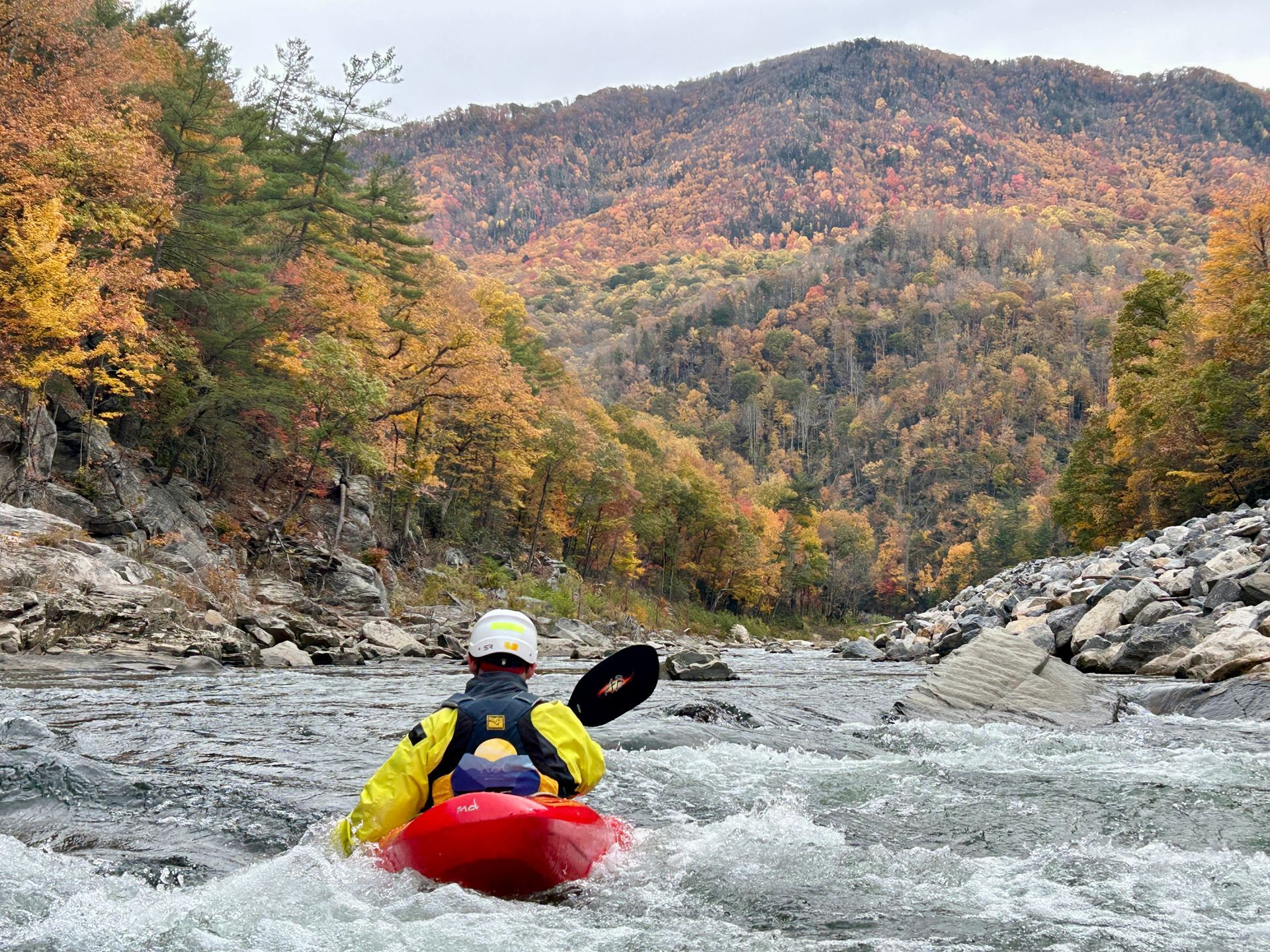
The oaks: red ones and brown ones
Oaks make up the largest share of our forest, and their fall color tracks the two great oak groups — a split you can read right off the leaf. The red oak group, whose leaves have bristle-tipped lobes, makes anthocyanins and does the real reds. Scarlet oak is the show-off, a brilliant scarlet and the best of the lot; the northern red oak runs russet to wine-red, and the black oak is yellow-brown to russet — black oak with the red leaves in the fall is the exception, not the rule. The white oak group, whose lobes are rounded, mostly does not make anthocyanins, so it goes yellow-brown to plain brown — chestnut oak, the ridge-top oak of the white oak group, is orange-yellow at best and mostly yellow-brown. White oak can do a decent wine-purple in a good year, but more often it settles for reddish-brown.
Three factors ensure that the oaks are brown. First, oaks are tannin factories — tannin richness is a trait of the whole genus, which is why oak bark was once used to tan leather — so brown is the default color of the oak leaves once the chlorophyll drains; red happens only where anthocyanins are made on top of it. Second, oaks color late, so an early hard freeze can kill a leaf before its fall color develops. Third, many young oaks hold their dead leaves all winter — a habit called marcescence — so much of what reads as brown fall color in oak woods is simply dead leaves that never dropped.
Why no two falls are alike
Weather does not set the schedule, but it grades the show. A warm, wet fall delays color. Drought can also dull or push leaves to drop early. A hard early freeze can kill leaves before they color at all. The best years pair bright, sunny days with cool nights — the combination that builds anthocyanins and traps the sugars they are made from. But whatever the year, the sequence holds: sourwood and black gum first, then maples and hickories, and last the oaks, ridge tops first and valley floors last.
So next fall, when the color first appears, look at a single tree closely. The yellow was in that leaf in July. The red was made last week, on purpose, for a leaf with days to live. And the brown oak leaf rattling on the branch in January is not a failure of color — it is the end of a job done thoroughly.
And as I put the finishing touches on this article, I'm looking out my window at our red maple, wearing its stunning yellow leaves. On a red maple. What gives? Nobody has counted, but a great many red maples shrug at their name every fall: some trees never make the red pigment at all and go out in clear yellow, others run orange, and the same tree tends to repeat its color-show year after year — which tells you how much of it is in the genes. The nursery trade knows it: the dependable reds in people's yards are named clones, picked out and grafted precisely because wild red maples can't be counted on to be red. Soil and weather have their say too, but the tree's own inheritance speaks hardest. And the red-maple name, in the end, is honest — it isn't just about October. A red maple shows red in every season: red buds on the winter twigs, red flowers before the leaves open in spring, red leaf stalks all summer. Our red maple that’s yellow every fall will be red again by March.
By Debbie Briscoe, NOLI Instructor Originally published Mar 2019, updated Oct 2026 In all my years of being an outdoor person I’ve met a...
It was a nearly perfect morning on the Washington state Pacific coast. My wife (Michelle) and I had a delicious breakfast, broke down camp, loaded our rented tandem kayak, and paddled down the sheltered bay that bisects Stewart Island. Along with our guide, Annie, we ran with the tide and a light southwesterly breeze to make the three-mile open water crossing to Henry Island. As we crossed in the 2-foot swells, we were just cruising, enjoying the warmth of the sun, and gazing toward the horizon hoping for our first orca sighting of the trip. Once we passed west of the tip of Henry Island, we headed south a bit and our guide signaled that we would take a break in a field of bull kelp. Thickets of bull kelp make an ideal resting place for sea kayakers because the kelp floats, which are round and 3 to 8 inches across, protrude from the water and break up the momentum of the waves. We stopped for a few minutes, bobbing up and down with the swell, occasionally chatting but mostly taking sips from our water bottles. Over the sound of waves and calling birds, Michelle heard a distant noise. It sounded like a cry for help – or was it a gull? We listened for a few seconds when another, more distinct yell rang out. For an instant we all hesitated, trying to determine the direction of the cries. From our vantage point low to the water, all we could see was dark bull kelp floats scattered across the ocean’s surface. It sounded like the panicked calls were coming from somewhere between us and the shoreline, so we sprinted southeast through the kelp patch toward shore. After we broke through the offshore kelp forest, we spotted two small dark objects on the surface alongside something that looked like a partially submerged log. As the distance closed, the larger object resolved into a flooded green aluminum canoe. The smaller ones were two middle school age boys struggling to reenter the water-filled boat. Every time they tried to enter; the boat would flip. As we neared, they quit trying to enter their boat. Instead, they hung onto the hull of the now inverted canoe and stared quietly as we approached. Michelle and I coasted up on the right side, leaving about a 5-foot gap between our tandem and the canoe, just in case the boys panicked and tried to climb on the deck of our boat before we were prepared. Caution is necessary in a situation like this because a panicking victim can easily capsize a would-be rescuer’s boat - leaving more people in the water. Annie coasted up a similar distance on the left side of the flooded craft. Our first evaluation was that the boys had been in the water for at least fifteen minutes. They were shivering, minimally responsive, and their movements were clumsy. After quickly weighing the options and their condition, we agreed that we could get them out of the water and warm them up more quickly by towing them to shore than by attempting to get the boys back into their boat. We then instructed the closest victim to grab the left perimeter line behind the rear cockpit of our tandem. At first, he refused because he did not want to release the cell phone in his right hand. The impasse was broken when Annie slid her boat up on his left side and convinced him to hand the phone to her. The other boy was similarly coaxed to grab the left stern perimeter line of Annie’s boat. We then started toward shore in the direction of the nearest cottage. When we had closed to within 75 yards of the house, a man came out onto the shore, saw us towing the boys, launched a tandem sit on top kayak, and headed out toward us. The boys, who were shaking with cold, were handed life vests and then hauled aboard the sit on top kayak by their father, while we stabilized the boat. As the reunited family headed back toward shore, we recovered the flooded canoe and towed it to shore. After this brief but adrenaline-filled detour, we continued our journey southwards down the Haro Straight, skirting the shore of Henry Island.
Leave No Trace Instructor Kayla Carter shares how we can all be environmental champions
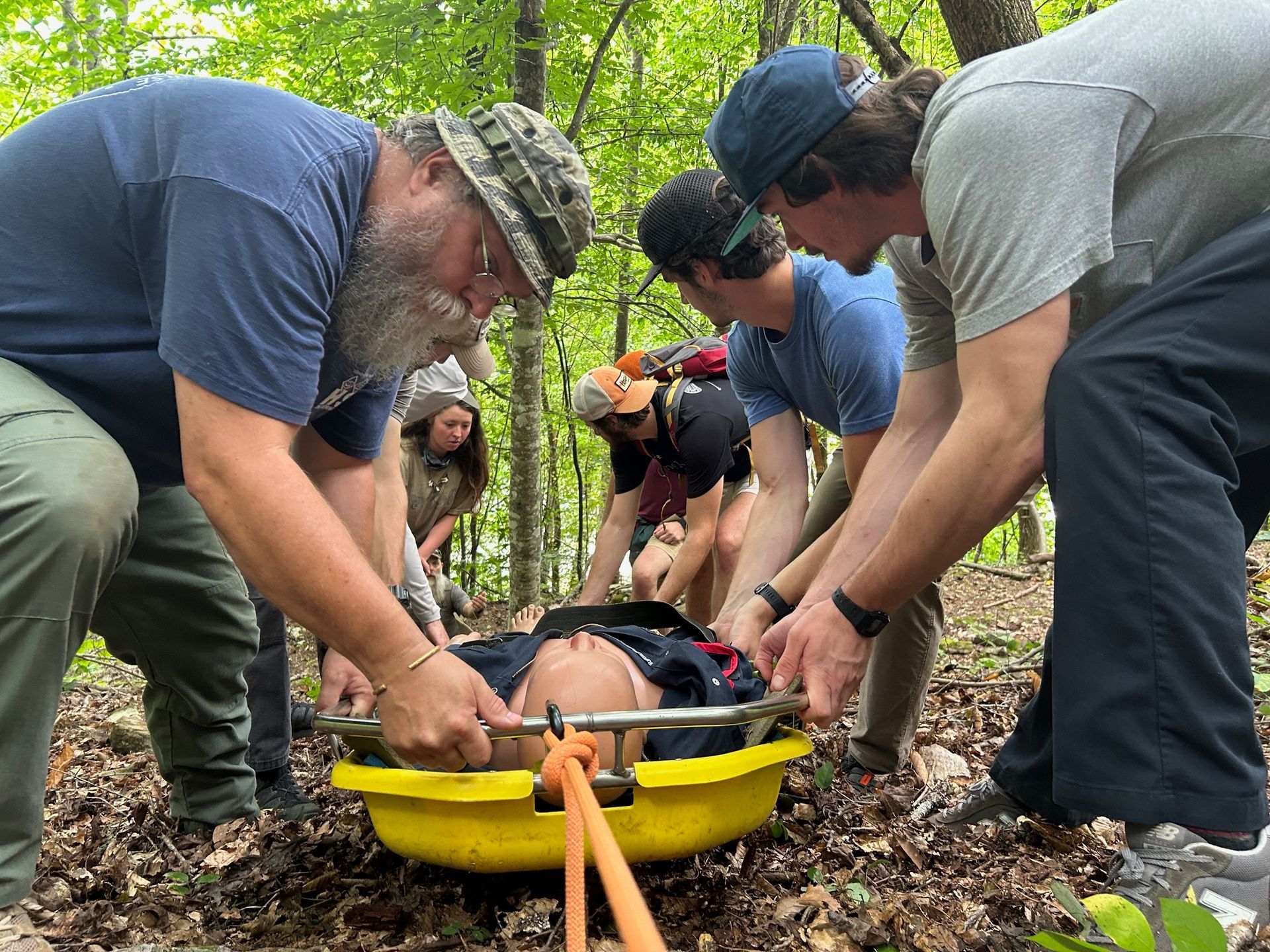
NOLI Wilderness First Responder Instructor Randy Manuel makes the case for why those who spend time outdoors should want this training.
why is the southern appalachian region so biodiverse?
By Debbie Briscoe, NOLI Instructor Originally published Mar 2019, updated Oct 16, 2025. In all my years of being an outdoor person I’ve met a...
By Scott Fisher In 1971, a 17 year-old girl was flying with her mother on Lansa Flight 508 when it was struck by lightning and...
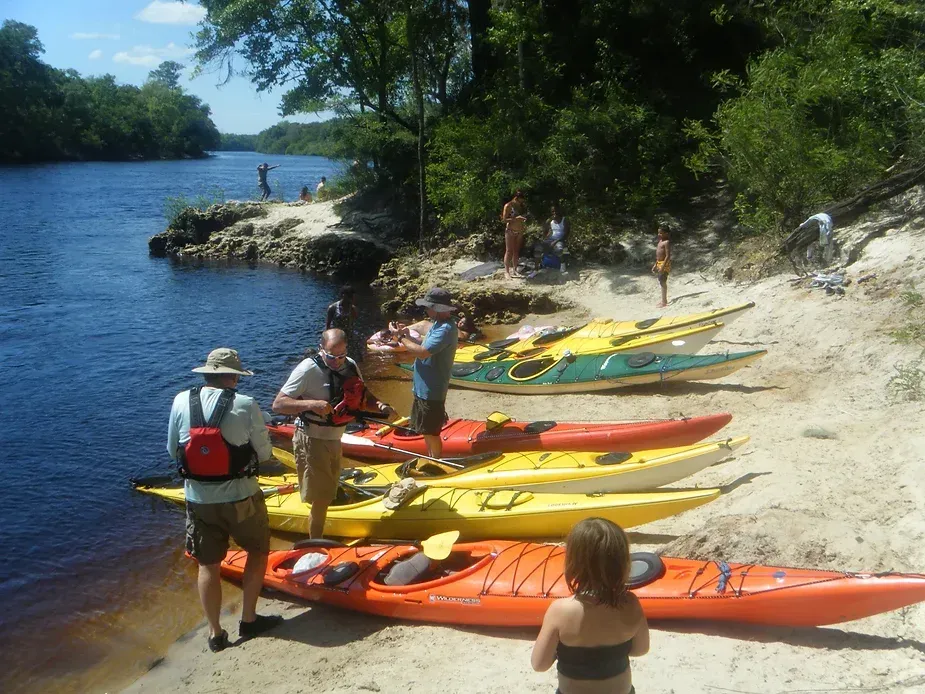
Anyone who knows me knows how much I love kayak camping.
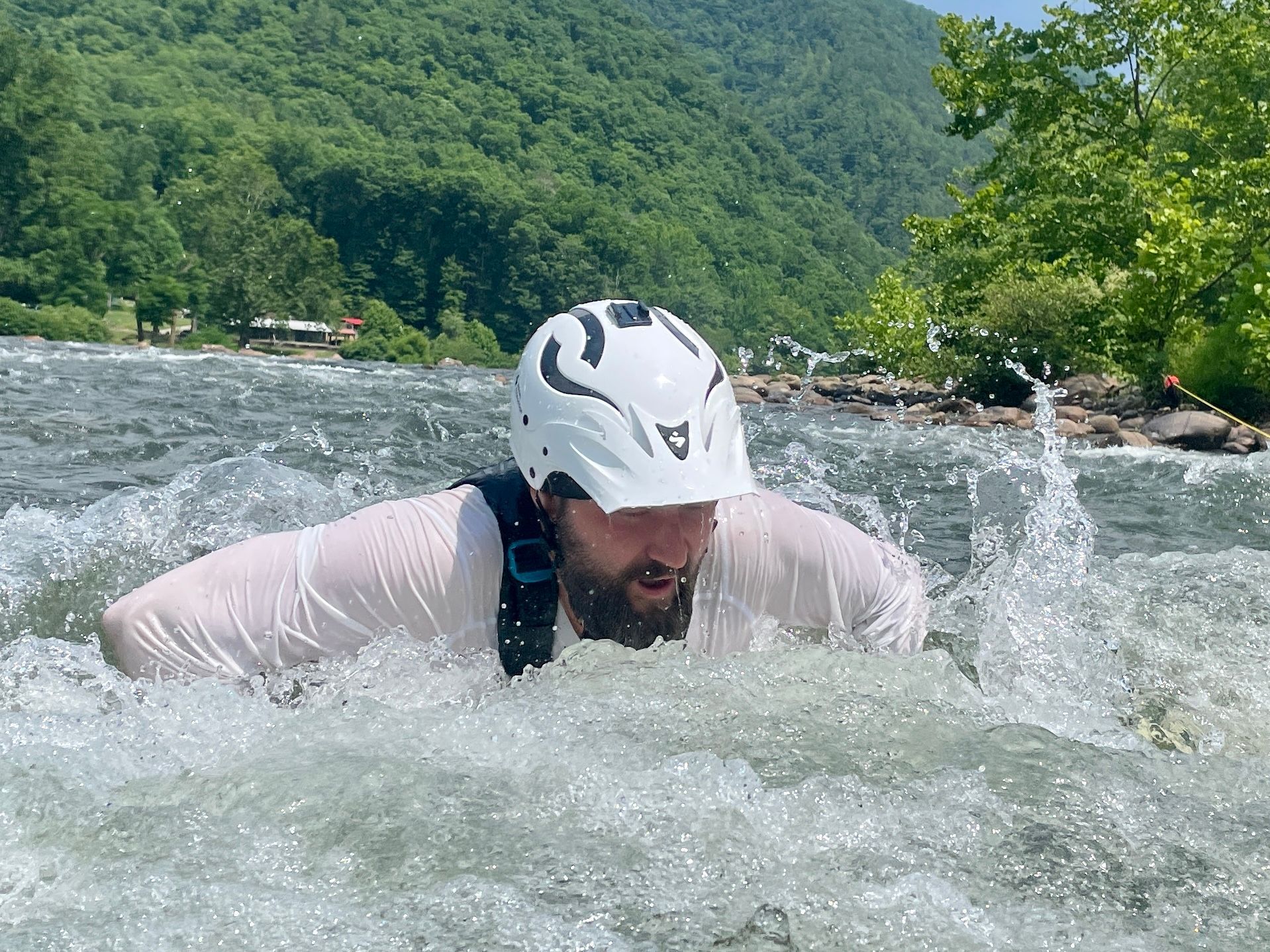
Taking a look at the virginia tech whitewater helmet safety ratings
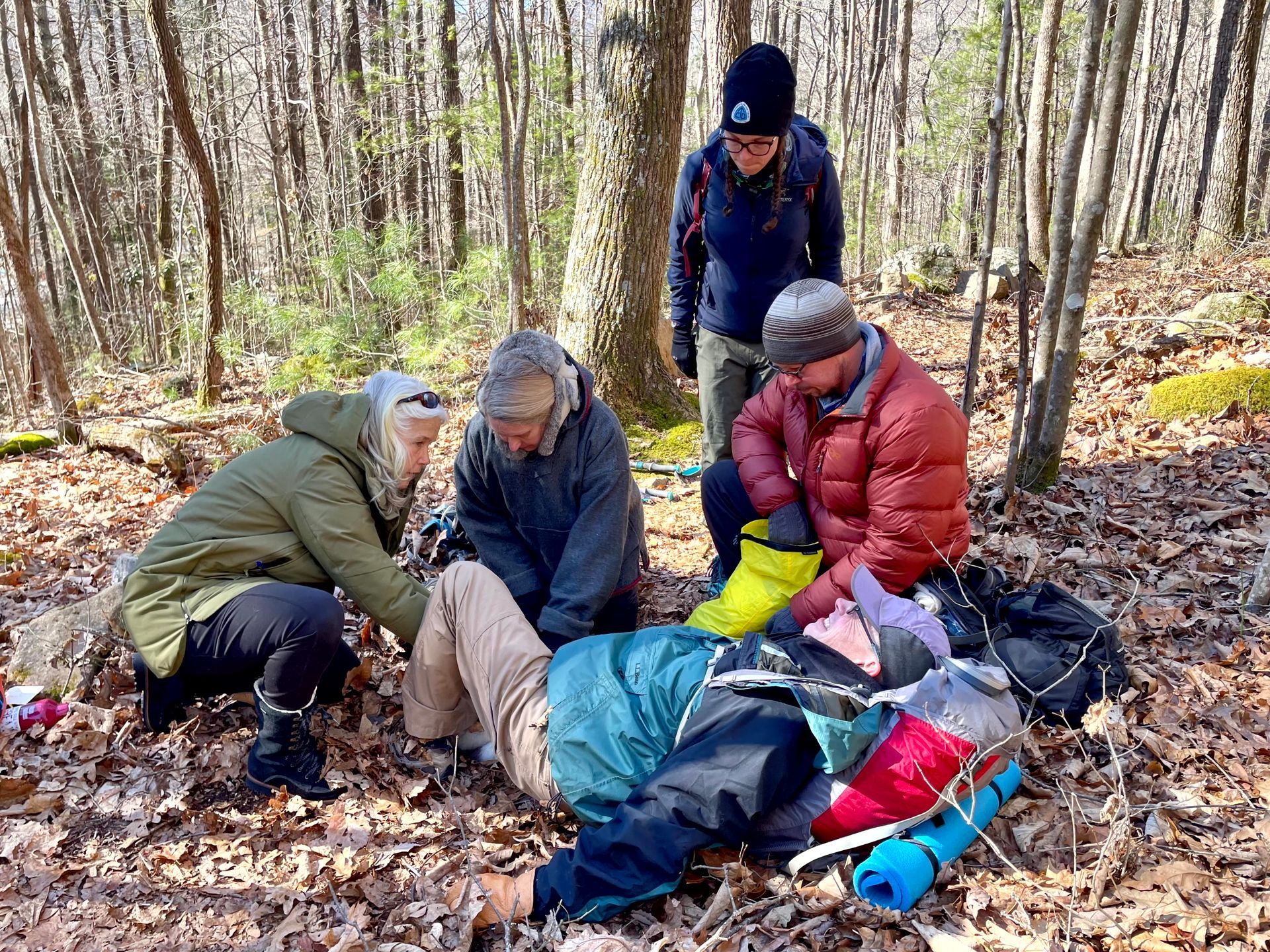
Wilderness first responder training - Is it for you??